Designing agent systems that can actually scale
Most teams start building AI agents the same way. A few tools. A few APIs. A working demo that proves the idea.
And for a while, everything feels fine.
Then the system grows. New tools are added. Security requirements tighten. Another agent needs access to the same capability, but in a slightly different way. What once felt simple starts to feel fragile.
The Model Context Protocol (MCP) emerged from this exact tension.
Our Foundations of Model Context Protocol (MCP) course is designed for Python developers who are already building agentic workflows and are beginning to ask a harder question: how do we design agent systems that remain flexible, secure, and maintainable as they evolve?
This four-hour, hands-on course is not about pursuing a new standard for novelty. It concerns understanding why MCP exists, when it is appropriate to use it, and how to build with it confidently in real-world systems.
When Direct API Integrations Stop Being Enough
Direct API integration is often the fastest way to get started. It is familiar, straightforward, and effective when systems are small.
But as agent ecosystems expand, teams start to notice the cracks. Each new tool requires custom logic. Tool reuse becomes difficult. Agents become tightly coupled to implementation details they should not need to know.
MCP offers a different approach.
Instead of wiring agents directly to individual APIs, MCP introduces a standardized client-server model where tools are exposed as discoverable capabilities. Agents connect, learn what tools are available, and invoke them dynamically. The protocol creates separation between agents and tools without sacrificing performance or clarity.
In the course, learners explore how MCP compares with traditional integrations through concrete scenarios and a structured comparison of tool count, scalability, and maintenance load. The focus is on building judgment about where MCP provides leverage and where simpler approaches may remain appropriate.
Understanding How MCP Fits Together
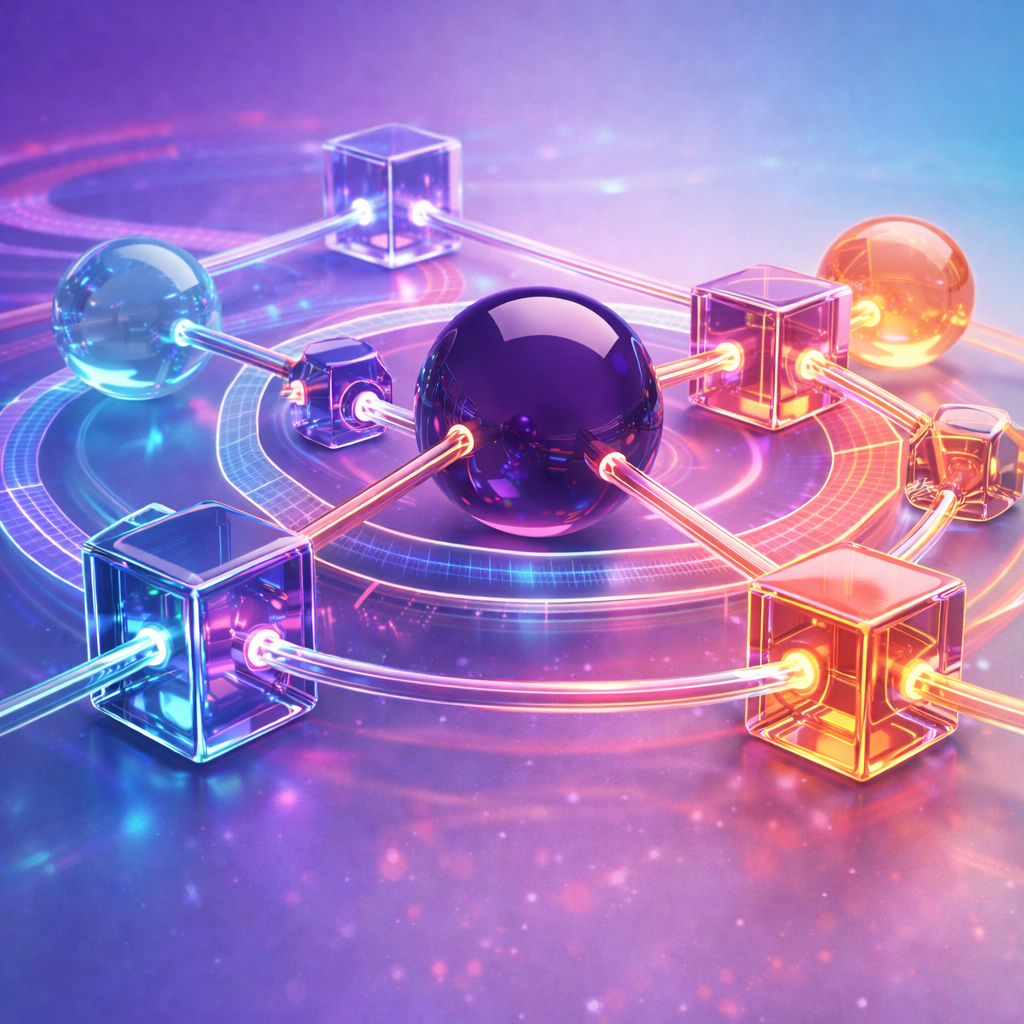
Before writing code, the course slows things down to build a shared mental model.
Participants walk through the core components of MCP and how they interact in practice. Hosts provide the environment where agents operate. Clients manage connections, tool discovery, and communication. Servers expose tools, resources, and prompts in a standardized way.
Rather than treating these pieces as isolated concepts, the course traces the full lifecycle of an MCP interaction. Learners see how requests are formed, how responses are returned, and how errors are handled across system boundaries. This foundation makes the protocol feel concrete rather than theoretical.
Along the way, participants explore the broader MCP ecosystem, including host applications and existing client implementations, to understand how MCP is already being used in modern development environments.
Building MCP Servers with Gradio
Once the architecture is clear, the course proceeds to hands-on construction.
Using Gradio, learners configure MCP servers for rapid prototyping and iteration. Gradio’s integration enables MCP tools to be defined using familiar Python functions, while automatically handling type inference and interface generation.
Participants implement real tools, test them through Gradio’s web interface, and interact with server responses. The emphasis is on learning by doing rather than merely following instructions.
By the end of this section, learners have a working MCP server that exposes tools in a clean, standardized way and can be easily reused across agent workflows.
Connecting Agents Through MCP Clients
Building servers is only half the equation. Agents require reliable methods to identify and use those tools.
In the client development portion of the course, learners connect agents to MCP servers using the smolagents tool. They address connection handling, tool discovery, and invocation, demonstrating how agents can dynamically adapt to available capabilities rather than relying on hard-coded assumptions.
This section brings the protocol to life. Participants observe how MCP changes how agents reason about tools and how it simplifies integration across different environments.
The course also surveys other MCP client frameworks, helping teams place their work within the broader ecosystem and understand how MCP supports interoperability across platforms.
Who This Course Is Designed For
This course is designed for teams that have already moved beyond the experimentation phase.
Participants should be comfortable working with Python, understand basic client-server concepts, and have experience building agentic workflows using frameworks such as LangChain. Familiarity with JSON and structured data is essential, since MCP communication relies on clear, machine-readable messages.
If your team is actively building agents and starting to feel architectural friction, this course meets you at the right moment.
What Teams Take With Them
By the end of the four hours, participants do more than learn a new protocol.
They gain clarity on when MCP is the right tool and when it is not. They understand how to design MCP servers and clients that fit cleanly into existing workflows. And they leave with practical experience building systems that are easier to extend, secure, and reason about over time.
More importantly, teams develop a shared language for talking about agent architecture, which is often the hardest part of scaling these systems responsibly.
Why MCP Matters Right Now
Agent capabilities are advancing quickly, but architecture still determines whether those capabilities create lasting value or ongoing complexity.
MCP represents a move toward clearer boundaries, standardized integration, and systems designed to evolve. Learning it early helps teams avoid patterns that are difficult to unwind later.
The Foundations of Model Context Protocol (MCP) focuses on preparing teams not only to build agents but also to build agent systems that can scale without breaking. Let’s chat about how this course is relevant to your team: https://datasociety.com/contact/.
Model Context Protocol (MCP) FAQ: How It Works, Why It Matters, and When to Use It
MCP enables teams to design agent systems that remain flexible, maintainable, and secure as they scale, avoiding the complexity and fragility of direct API integrations.