Grocery is not just digitizing. It is becoming intelligent.
What used to be a highly manual, labor-intensive industry is now moving toward real-time decision-making powered by AI and data. This shift is not theoretical. It is operational and already reshaping how stores function day-to-day. Leaders are no longer asking how to collect more data. They are asking how to act on it in the moment.
This shift is driven by a combination of pressure and opportunity. Rising costs, supply chain disruptions, and customer expectations are forcing grocery leaders to rethink decision-making and how to drive customer demand. At the same time, advancements in AI are making it possible to analyze and respond to data at scale in ways that were not previously achievable.
As a result, grocery organizations are beginning to operate less like traditional retail environments and more like interconnected systems. Every store, transaction, and supply chain movement becomes part of a broader intelligence layer. This creates the foundation for faster decisions, better outcomes, and a more responsive business model.
Why Grocery is Ripe for AI Transformation
The level of investment in AI across retail is no longer a question. It’s visible in how the industry is showing up. Events like Shoptalk continue to highlight just how “all in” retail leaders are on AI and data, with entire tracks dedicated to transformation, personalization, and real-time decision-making.
The grocery industry sits at the intersection of complexity and scale, which makes it uniquely positioned for AI-driven transformation. It is an environment where small inefficiencies compound quickly and where even minor improvements can drive significant financial impact. High workforce turnover, thin margins, and perishable inventory create constant operational pressure.
At the same time, grocery organizations generate massive amounts of data across transactions, inventory, supply chain logistics, and customer behavior. Historically, much of this data has been underutilized or siloed across systems. AI changes that by enabling organizations to connect and interpret data in real time.
From Analytics to Real-Time Intelligence
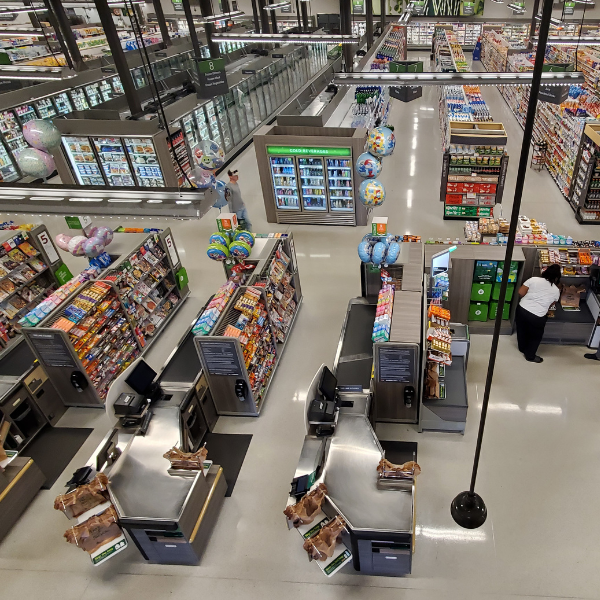
Most grocery organizations already have access to data and analytics tools. The challenge is not availability. It is usability and timing. Traditional analytics often rely on historical reporting, which limits the ability to act in the moment. By the time insights are generated, the opportunity to influence outcomes has often passed.
The shift toward real-time intelligence changes this dynamic entirely. Instead of looking backward, organizations can monitor operations in real time and respond immediately. This includes real-time visibility into inventory levels, pricing fluctuations, demand patterns, and store performance across locations.
AI enables this shift by continuously analyzing incoming data and generating recommendations. For example, instead of manually identifying stock shortages, systems can proactively suggest replenishment actions. Instead of static pricing strategies, organizations can dynamically adjust based on demand and conditions.
This is not just about speed. It is about relevance. When decisions are made in real time, they are more accurate, more contextual, and more impactful. Over time, this creates a more adaptive organization that can respond to both internal and external changes with greater precision.
The Four Areas Defining AI in Grocery
Across advisory engagements, four consistent priority areas are emerging as the foundation for AI transformation in grocery retail. These areas reflect both operational challenges and strategic opportunities, and they provide a practical starting point for organizations looking to move forward.
1. Personalization and Loyalty
Customer expectations continue to evolve, with increasing demand for personalized experiences. AI enables organizations to tailor promotions, pricing, and recommendations based on individual behavior and preferences. This not only improves customer satisfaction but also drives revenue by increasing engagement and conversion.
2. Modernizing Core Systems
Legacy systems often limit the ability to integrate and act on data effectively. Many grocery organizations operate with fragmented platforms that were not designed for real-time processing or AI integration. Modernization is not just about replacing systems. It is about creating a connected data environment where information can flow seamlessly across the organization.
3. Reducing Waste
Food waste remains one of the most significant challenges in grocery retail. AI can improve demand forecasting and inventory management, reducing overstocking and spoilage. This has both financial and sustainability benefits, making it a high-impact use case for many organizations.
4. Prioritizing Use Cases
One of the most common challenges is not a lack of ideas, but a lack of focus. Organizations often attempt to pursue too many initiatives at once, leading to stalled progress. Prioritization ensures that efforts are aligned with business value and that resources are directed toward initiatives that can deliver measurable outcomes.
The Real Barrier: Workforce Adoption
Technology is not the primary constraint in AI transformation. Workforce adoption is.
As AI capabilities expand, the responsibility for using data is shifting beyond leadership teams and into daily operations. This includes store managers, frontline employees, and supply chain teams who are expected to incorporate data into their decision-making processes. Without proper support, this transition can create confusion rather than clarity.
Effective adoption requires more than training. It requires alignment between tools, workflows, and expectations. Employees need to understand not just how to use AI systems, but how those systems fit into their daily responsibilities. When this alignment is missing, even the most advanced technologies fail to deliver value.
From Tools to Decisions
The true value of AI is not in the tools themselves, but in the decisions they enable. Many organizations invest in technology without fully addressing how those tools will influence behavior and outcomes. This creates a disconnect between capability and impact.
To bridge this gap, organizations must make decision-making the core objective. This means identifying where AI can provide the most value, ensuring that data is reliable and accessible, and aligning teams around shared goals. It also requires clear governance structures to guide decision-making and define who is responsible.
AI advisory plays a critical role in this process by connecting strategy with execution. It helps organizations move beyond isolated initiatives and toward a cohesive approach that integrates technology, data, and workforce development. When these elements are aligned, AI becomes a driver of measurable business outcomes rather than an isolated investment.
What This Enables
When AI is implemented effectively, it transforms how grocery organizations operate. Decisions become faster, more accurate, and more consistent across locations. This leads to improved efficiency, reduced waste, and better customer experiences.
One of the most significant benefits is the ability to operate in real time. Instead of relying on delayed reports, organizations can respond immediately to changes in demand, inventory, and market conditions. This creates a more agile and resilient business model.
Additionally, AI enables a more empowered workforce. Employees at all levels gain access to insights that help them make better decisions, reducing reliance on centralized control and increasing overall productivity. Over time, this creates a culture where data is not just available, but actively used to drive outcomes.
Final Thoughts
Most grocery organizations are not lacking data. They are lacking a holistic approach to an ‘intelligent store approach’ that is only possible with alignment.
AI does not solve fragmented decision-making. It amplifies it. If systems, teams, and priorities are misaligned, AI will amplify inefficiencies rather than eliminate them. This is why many initiatives fail to deliver on their initial promise.
The organizations that succeed take a different approach. They focus on aligning strategy, data, technology, and workforce from the beginning. They treat AI as an operating model rather than a standalone tool.
This shift is what enables measurable outcomes. Not more data. Not more tools. Better decisions are made consistently across the organization.
If you’re navigating how to turn AI from activity into real operational impact, this is exactly the kind of work Donna Medeiros focuses on. You can book a time directly with her here: https://meetings.hubspot.com/donna-medeiros/ai_advisor_session
AI in Grocery Retail: Frequently Asked Questions
AI is used for demand forecasting, inventory optimization, pricing, personalization, and real-time operational insights. It helps grocery retailers make faster, more accurate decisions across stores and supply chains.
AI improves demand forecasting and inventory management by analyzing historical and real-time data. This helps reduce overstocking and spoilage while ensuring product availability.
Most AI projects fail due to a lack of workforce adoption, poor data alignment, and unclear prioritization of use cases, rather than limitations in the technology itself.
Real-time retail intelligence refers to the use of AI and live data to monitor operations and make immediate decisions, improving responsiveness and operational efficiency.
Retailers should start by identifying high-impact use cases, aligning leadership on desired outcomes, and investing in workforce training alongside technology implementation.