Frequently Asked Questions

Features & Capabilities

What products and services does Data Society offer?

Data Society provides a comprehensive suite of products and services designed to empower organizations with data and AI capabilities. Offerings include hands-on, instructor-led upskilling programs, custom AI solutions tailored to industry challenges, equitable workforce development tools, industry-specific training (for healthcare, retail, energy, government, and more), AI and data services (predictive models, cloud-native courses, project ideation, machine learning, UI/UX analytics), and technology skills assessments. These solutions are designed to deliver measurable outcomes, improve operational efficiency, and foster innovation across industries. Learn more.

What are the key capabilities and benefits of Data Society's product?

Key capabilities include tailored workforce skill development, operational efficiency through AI-powered tools (such as ChatGPT, Copilot, Power BI, Tableau), enhanced decision-making with predictive analytics and generative AI, equity and inclusivity via dynamic visual dashboards, seamless integration into existing systems, and proven results such as improved healthcare access for 125 million people (Optum Health) and 0,000 in annual cost savings (HHS CoLab). Source.

What integrations does Data Society support?

Data Society integrates with a variety of platforms to enable seamless workflows, including Power BI (for data visualization), Tableau (for interactive analytics), ChatGPT (for generative AI applications), Copilot (for process automation), Python and R (for advanced data workflows), and SQL (for streamlined data access). These integrations help organizations address industry-specific challenges and improve operational efficiency. Source.

How does Data Society ensure product performance?

Data Society's products are designed for high-impact skills development, operational efficiency, and enhanced decision-making. Customers have reported measurable outcomes such as 0,000 in annual cost savings (HHS CoLab) and improved healthcare access for 125 million people (Optum Health). The solutions foster innovation, inclusivity, and long-term workforce development. Source.

Use Cases & Industry Applications

Which industries does Data Society serve?

Data Society's case studies and solutions span government (e.g., U.S. Department of State, City of Dallas), energy & utilities, media, healthcare (Optum Health), education, retail, aerospace & defense (NASA, U.S. Air Force), financial services (Discover Financial Services, Inter-American Development Bank), professional services (Deloitte, Booz Allen Hamilton), and telecommunications (Canada Broadband). See case studies.

Who can benefit from Data Society's solutions?

Data Society's solutions are designed for four key personas: Generators (professionals using data/AI in daily tasks), Integrators (analysts and power users building dashboards and workflows), Creators (developers and data scientists designing and deploying models), and Leaders (executives and strategists focusing on ROI and alignment). Solutions are also tailored for industries such as healthcare, media, retail, energy, government, and more. Learn more.

What are some real-world examples of Data Society's impact?

Notable case studies include: improving healthcare access for 125 million people (Optum Health), 0,000 in annual cost savings (HHS CoLab), a 28% improvement in technical knowledge for Discover Financial Services, and operational efficiency improvements for the City of Dallas. See more case studies.

Pain Points & Solutions

What problems does Data Society solve for organizations?

Data Society addresses challenges such as misalignment between strategy and workforce capability, siloed departments and fragmented data ownership, insufficient data and AI literacy, overreliance on technology without human enablement, weak governance and unclear accountability, change fatigue and cultural resistance, and lack of measurable ROI. Solutions include tailored training, advisory services, seamless integration, and clear KPIs. Source.

How does Data Society solve these pain points?

Data Society offers tailored, instructor-led training and advisory services to align workforce skills with organizational goals, integrates data across systems using tools like Power BI and Tableau, provides hands-on programs for foundational data and AI literacy, ensures human enablement through mentorship, establishes robust governance frameworks, employs change management strategies, and delivers clear KPIs and continuous tracking for ROI. Source.

Are solutions tailored for different user roles or personas?

Yes, Data Society customizes solutions for Generators (hands-on training for daily data/AI use), Integrators (integration of data across systems), Creators (advanced training for developers and data scientists), and Leaders (advisory services and KPIs for ROI visibility). This ensures each persona's unique challenges are addressed effectively. Source.

Implementation & Onboarding

How easy is it to get started with Data Society?

Data Society's solutions are designed for quick and efficient implementation. Organizations can start with a focused project, and the onboarding process is streamlined: connect with Data Society to discuss goals, receive a customized path, and benefit from live, instructor-led training. Automated systems minimize resource strain, and training can be delivered online or in-person with small cohorts for engagement. Source.

What training and support are available to help customers adopt Data Society's solutions?

Customers receive live, instructor-led training, tailored learning paths, onboarding support, mentorship, interactive workshops, dedicated office hours, and technical assistance via the Learning Hub and Virtual Teaching Assistant. Automated systems ensure minimal maintenance, and continuous improvement is supported through ongoing coaching and feedback. Source.

How does Data Society handle maintenance, upgrades, and troubleshooting?

Data Society's automated training and assessment systems require minimal maintenance. Custom machine learning systems evolve through continuous learning, monitoring new data and retraining as needed. Customers have access to ongoing support, technical assistance, and structured training to ensure smooth operations and efficient troubleshooting. Source.

Security & Compliance

How does Data Society address security and compliance?

Data Society prioritizes security and compliance by helping organizations manage data security in the cloud, ensuring compliance with regulations like HIPAA, FedRAMP, GDPR, and CCPA, and adopting hybrid deployment models for sensitive data. Proactive compliance strategies include governance frameworks, ethical data practices, automated consent management, and regular policy updates. Source.

Competition & Differentiation

How does Data Society differ from other AI and data training companies?

Data Society stands out by offering tailored, instructor-led training and custom AI solutions for specific industry challenges, equitable workforce development tools, advanced analytics, seamless integrations (with tools like ChatGPT, Copilot, Power BI, Tableau), and a proven track record with over 50,000 learners, including Fortune 500 and government clients. Solutions are customized for different user segments, ensuring relevance and measurable outcomes. Source.

Metrics & Outcomes

What business impact and metrics can customers expect from Data Society?

Customers can expect high-impact skills development, operational efficiency, enhanced decision-making, equity and inclusivity, proven ROI (e.g., 0,000 annual cost savings), and long-term workforce development. KPIs include training completion rates, project outcomes, data integration rates, employee confidence, adoption rates, compliance scores, and ROI per initiative. Source.

Data analytics is being utilized to understand human responses to rare celestial events like the 2024 solar eclipse, aiding in forecasting travel patterns, managing infrastructure, and assessing economic impacts.

Eclipse Analytics: Tracking the Human Response to Celestial Phenomena

After much anticipation, the Great American Eclipse of 2024 has come and gone, leaving people in awe and communities and industries measuring the impact of this rare cosmic event. Science long ago demystified the when, where, and why of solar eclipses, beginning with early efforts to predict them by identifying patterns in historical data. Still, while eclipses are no longer the enigmas that sparked existential fears in ancient times, we continue to unravel the uncertainties surrounding how humans will behave in response to these phenomena.

The Value of Forecasting the Flock

Predicting travel and consumption trends during unusual events helps businesses prepare for impacts including flight delays and increased staffing and stocking needs. Industries such as the short-term rental business can leverage tourism forecasts to manage dynamic pricing and optimize their marketing investments. 
Eclipse Analytics

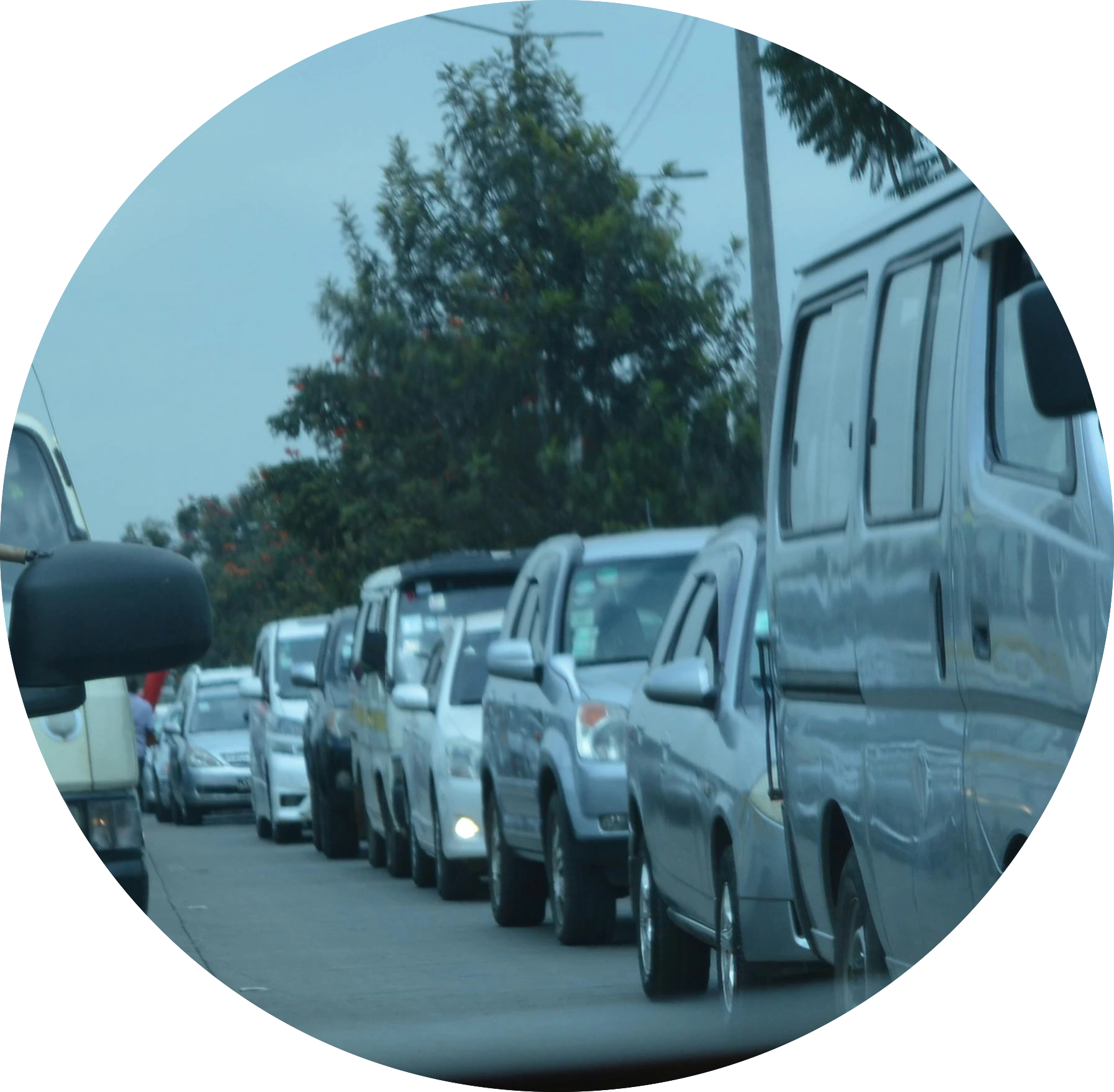
For communities in or near the path of totality, local governments seek insights into what to expect in order to manage potential disruptions such as congested traffic and delays in emergency response. For example, to help emergency services track areas of potential concern, the Ohio Department of Transportation developed an interactive online map that used anonymized cellphone geodata, estimates visitor numbers, and travel data from states in the path of totality of the 2017 eclipse.

Preparing for these deviations from the norm is especially critical for smaller towns and areas that seldom see much tourism. For some communities in the path of totality, the fleeting spectacle of the eclipse is an opportunity to convert newcomers into repeat visitors and to gain insights into their towns’ potential as tourism destinations. Such was the motivation of a professor at Southern Illinois University who gathered social media data related to the 2017 and 2024 solar eclipses, both of which reached totality near his campus’ town of Carbondale, to study tourism patterns in his small community.

Predicting Human Response to Exceptional Events

Because total solar eclipses are uncommon phenomena for any given location, we have precious few opportunities to develop insights into what to expect when these occasions do arise. GreatAmericanEclipse.com, an online resource for all things eclipse, tackles this challenge with ArcGIS software, US Census data, and a digital road network. The site provides detailed maps of locations within the path of totality and the routes to reach them by car. Assuming that most eclipse-seekers would opt to travel the shortest distance by car, GreatAmerricanEclipse.com’s analysts account for several variables, including planned viewing events, weather odds, and proximity to major highways and major population centers. For the 2024 total eclipse, the website’s visitation prediction model produced a wide-ranging forecast of between one and four million people traveling to the path of totality for the eclipse.

What the Early Numbers Show

In the eclipse’s aftermath, it will take some time before many of the eclipse-related numbers will be available. For example, Burlington, VT, a popular destination for eclipse tourism this year, will compile sales and use tax and gross receipts to get a better idea of economic impact, and the Vermont Agency of Transportation will use smartphone geolocation data to quantify the increase in vehicle traffic across the state. 

In the meantime, the team at Mapbox.com, a site that uses telemetry data to track movement data, notes that the change in on-the-ground activity on April 8 may have been the largest they have observed in a single day since they began tracking such metrics four years ago. The website reports an increase of 25% or more in activity in regions in the path of the eclipse. The site’s analysts speculate that the weather, a fickle force that confounds early estimates for travel, likely drove down the number of visitors to locations—such as parts of Texas—that saw cloudy conditions on eclipse day.

Watching the Metrics of Watching the Sky

Travel patterns weren’t the only behaviors of interest during the eclipse. One forecast ahead of the 2017 solar eclipse estimated that the spectacular distraction in the sky could cost US businesses almost $700 million in lost productivity. Also, in anticipation of a spike in cell phone usage during this year’s total eclipse, the Washington Post published tips to help readers prepare for service disruptions in case cellular networks got overwhelmed. 

However, a notable statistic that emerged from the Great American Eclipse of 2024 indicates that people disconnected for a moment as the sun disappeared that day. One study estimated that internet use within the path of totality dropped 40-60% from the week prior. 

Is the takeaway from this insight that people in the path of totality stepped away from their devices to experience the moment? If so, it seems that human behavior really does continue to defy expectations. And it’s heartening to believe that, while eclipses may no longer be shrouded in the mystery that struck fear in our ancient ancestors’ hearts, their power to inspire awe endures.


Don’t wanna miss any Data Society Resources?

Stay informed with Data Society Resources—get the latest news, blogs, press releases, thought leadership, and case studies delivered straight to your inbox.

Data: Resources

Get the latest updates on AI, data science, and our industry insights. From expert press releases, Blogs, News & Thought leadership. Find everything in one place.

View All Resources
  • AI Is Forcing Employees to Learn in Public (Whether They’re Ready or Not)

    April 22, 2026

    Read more

  • Deploying AI Apps at the Enterprise Level with Amazon Bedrock

    April 15, 2026

    Read more