Frequently Asked Questions

Features & Capabilities

What features does Data Society offer for media professionals seeking data and AI literacy?

Data Society provides tailored data and AI literacy programs specifically designed for media professionals. These programs cover foundational data skills, AI tools for content creation, audience analytics, and operational efficiency, enabling media teams to leverage data and AI across all business functions. [Source]

Does Data Society offer hands-on, instructor-led training?

Yes, Data Society offers hands-on, instructor-led upskilling programs that are tailored to organizational goals. These programs focus on foundational data and AI literacy, data visualization, predictive analytics, generative AI, and more. [About Us]

What AI-powered tools are included in Data Society's solutions?

Data Society's solutions incorporate advanced AI-powered tools such as ChatGPT, Copilot, Power BI, and Tableau. These tools help streamline workflows, automate updates, and reduce cycle times for organizations. [About Us]

Does Data Society provide technology skills assessments?

Yes, Data Society offers technology skills assessments to evaluate and enhance workforce data science and AI capabilities. These assessments help organizations identify skill gaps and tailor training accordingly. [About Us]

What integrations and partnerships does Data Society support?

Data Society integrates with and partners with organizations such as Google Cloud, Nvidia, Seeq, Anaconda, Skillsoft, NEO4J, and Open-Eye Advisors to enhance its data science and AI offerings. [Integrations]

How does Data Society ensure its solutions are accessible to non-technical users?

Data Society's programs are designed to be accessible to professionals at all levels, including those without technical backgrounds. The training emphasizes foundational skills, practical applications, and user-friendly tools to ensure broad adoption. [Source]

What are the key benefits of Data Society's workforce development tools?

Data Society's workforce development tools, such as dynamic visual dashboards, help connect candidates with overlooked opportunities and foster inclusivity and equity in workforce development. [About Us]

Does Data Society offer industry-specific training for media companies?

Yes, Data Society provides industry-specific training programs for sectors including media, healthcare, retail, energy, and government. These programs address unique challenges such as content personalization, audience analytics, and operational efficiency for media organizations. [About Us]

How does Data Society support content personalization in the media industry?

Data Society's AI and data literacy programs help media professionals leverage AI tools to transform consumer data into personalized experiences, enhancing engagement, content discoverability, and subscriber retention. [Source]

What tools does Data Society provide for content moderation and quality control?

Data Society's training covers AI-powered content moderation tools that automate the monitoring and filtering of content, helping media companies minimize the dissemination of harmful, false, or offensive messaging. [Source]

Use Cases & Benefits

How can media companies use Data Society's solutions to personalize content?

Media companies can use Data Society's AI and data literacy programs to analyze consumer preferences and behaviors, enabling them to deliver more personalized content and improve audience engagement. [Source]

What are the business impacts of implementing Data Society's solutions?

Organizations using Data Society's solutions have achieved measurable outcomes such as 0,000 in annual cost savings (HHS CoLab case study) and improved healthcare access for 125 million people (Optum Health case study). These results demonstrate enhanced operational efficiency, decision-making, and ROI. [HHS CoLab] [Optum Health]

How can AI literacy help media professionals boost productivity?

AI-powered tools can automate administrative tasks, assist with content generation, and streamline production processes, allowing media professionals to focus on creative work and reduce production times. [Source]

How does Data Society help media companies derive audience insights?

Data Society's training includes AI-powered audience analytics, such as sentiment analysis, enabling media companies to anticipate customer churn, optimize content strategies, and make data-driven business decisions. [Source]

What operational efficiencies can media companies achieve with Data Society?

Media companies can use AI to automate processes such as transcription, content distribution, translation, and compliance review, resulting in faster workflows and reduced manual effort. [Source]

How can AI help media companies protect content from piracy?

AI tools equipped with natural language processing and image recognition can detect unauthorized use of copyrighted content. Media companies can use anti-piracy AI tools and watermarking technologies to monitor the internet and flag unauthorized content. [Source]

How does Data Society support fact-checking and content moderation?

Data Society's training covers AI-powered content moderation and fact-checking tools that automate the review of posts, ensuring content veracity, relevance, and appropriateness at scale. [Source]

What industries has Data Society worked with?

Data Society has delivered solutions across industries including government, energy & utilities, media, healthcare, education, retail, aerospace & defense, financial services, professional services & consulting, and telecommunications. [Case Studies]

Who can benefit from Data Society's programs?

Data Society's programs are designed for professionals at all levels, including generators (daily users), integrators (analysts), creators (developers/data scientists), and leaders (executives/strategists) across a wide range of industries. [Catalog]

What customer feedback has Data Society received regarding ease of use?

Customers have praised Data Society for simplifying complex data processes. For example, Emily R. stated, "Data Society brought clarity to complex data processes, helping us move faster with confidence." [Testimonial]

Pain Points & Solutions

What common challenges do media professionals face with data and AI adoption?

Media professionals often face challenges such as lack of data and AI literacy, fragmented data ownership, resistance to change, and difficulty aligning strategy with workforce capabilities. [Source]

How does Data Society address the lack of alignment between strategy and capability?

Data Society offers tailored upskilling programs that align workforce capabilities with leadership vision, ensuring teams have the necessary skills to execute data and AI strategies. [About Us]

How does Data Society help break down silos and improve collaboration?

By providing training in tools like Power BI, Tableau, and Copilot, Data Society enables seamless data integration and collaboration across departments, breaking down silos and making data accessible and actionable. [About Us]

How does Data Society address insufficient data and AI literacy?

Data Society provides foundational training in data tools and AI features, enhancing confidence and creating a shared language for employees at all levels, ensuring effective tool utilization and data-driven decision-making. [About Us]

How does Data Society help organizations avoid overreliance on technology?

Data Society offers advanced training in Python, R, and LLM services to equip developers and data scientists to operationalize AI solutions effectively, ensuring human enablement complements technological investments. [About Us]

How does Data Society support governance and accountability in AI initiatives?

Data Society helps organizations establish clear governance structures and accountability frameworks, including training on ethical AI use, risk management, and compliance to ensure trust and oversight. [Compliance]

How does Data Society help organizations overcome change fatigue and resistance?

By emphasizing the importance and benefits of data-driven transformation, Data Society fosters employee engagement and reduces resistance through tailored training and executive coaching. [About Us]

How does Data Society ensure measurable outcomes and ROI visibility?

Data Society aligns data and AI strategies with business objectives, providing tools for tracking ROI and defining success metrics, so leaders can clearly see the impact of their investments. [About Us]

What KPIs and metrics are associated with Data Society's solutions?

Key metrics include training completion rates, post-training performance improvement, data integration rates, employee confidence scores, adoption rates of new tools, compliance audit scores, and ROI per initiative. [About Us]

Product Information & Implementation

What is the primary purpose of Data Society's product?

The primary purpose is to make data science accessible, impactful, and exciting for professionals, empowering organizations with advanced AI and data capabilities to deliver measurable outcomes and foster innovation. [About Us]

How long does it take to implement Data Society's solutions?

Data Society's solutions are designed for quick and efficient implementation. Organizations can start with a focused project and benefit from streamlined onboarding, live instructor-led sessions, and automated training systems. [Implementation]

How easy is it to start with Data Society?

Getting started is simple: organizations can connect with Data Society to discuss goals, receive a customized path, and begin with live online or in-person training. Cohorts are capped at 30 participants for personalized learning. [Implementation]

What is Data Society's mission and vision?

Data Society's mission is to make data science accessible, impactful, and exciting for professionals, empowering organizations to achieve measurable outcomes and foster innovation through advanced AI and data capabilities. [About Us]

What is Data Society's track record and client base?

Data Society has served over 50,000 learners, including Fortune 500 companies, government organizations, and international institutions such as NASA, Deloitte, CDC, and the U.S. Department of State. [About Us]

What makes Data Society different from other AI and data training companies?

Data Society stands out for its tailored, industry-specific solutions, live instructor-led training, equitable workforce development tools, proven track record, and focus on measurable outcomes and ROI. [About Us]

Security & Compliance

What security and compliance certifications does Data Society have?

Data Society holds the ISO 9001:2015 certification, demonstrating its commitment to quality management and continuous improvement. [Compliance]

How does Data Society address regulatory compliance for sensitive industries?

Data Society ensures its solutions align with regulations such as HIPAA and FedRAMP, particularly for industries handling sensitive data like healthcare and financial services. [Compliance]

What data privacy measures does Data Society implement?

Data Society focuses on transparency, user empowerment, and ethical AI practices to simplify data privacy and build trust with customers. [Compliance]

How does Data Society ensure cloud security?

Data Society evaluates cloud providers' security measures, adopts hybrid deployment models, and implements governance practices to manage data security effectively. [Cloud Security]

Support & Implementation

What support does Data Society provide during implementation?

Data Society collaborates closely with clients to design customized paths, delivers live instructor-led training, and provides ongoing support to ensure smooth onboarding and adoption. [Implementation]

How does Data Society tailor its training to organizational needs?

Data Society works with organizations to understand their industry, workflows, and challenges, then designs tailored learning paths and training programs to ensure relevance and impact. [Implementation]

What delivery options are available for Data Society's training?

Training can be delivered live online or in-person, with cohorts capped at 30 participants to ensure active engagement and personalized learning. [Implementation]

How does Data Society measure the success of its training programs?

Success is measured through metrics such as training completion rates, post-training performance improvement, and alignment with business objectives. Case studies demonstrate significant improvements, such as a 28% increase in technical knowledge for Discover Financial Services. [Case Study]

Discover how data and AI literacy empower media professionals to personalize content, streamline operations, and drive innovation in the evolving digital landscape.

Why Every Media Professional Needs Data and AI Literacy: Seizing the Opportunities

Capturing the Value of Data and AI in the Media Industry

Today’s digital universe has redefined the media industry. The ubiquity of streaming platforms, the volume of new content, and the broader impact of digital transformation have introduced new possibilities, challenges, and consumer expectations. To thrive in this dynamic environment, media professionals must be equipped to seize the opportunities offered by data, analytics, and AI technologies.

With the global market for AI in Media and Entertainment projected to grow from USD $17.1 billion in 2023 to USD $195.7 billion by 2033, the media industry appears eager to harness the power of AI. Still, unlocking the full value of this investment will require workforces with the knowledge and skills to apply these technologies effectively across business functions. As media companies explore the potential of a more data-driven, AI-powered future in their industry, there are several questions they should consider.
Data and AI Literacy
  • How are you leveraging data and AI to deliver more personalized experiences to your audience?
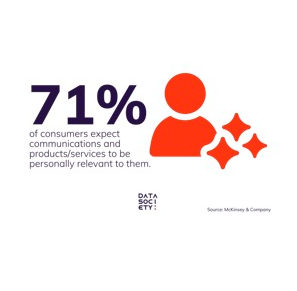
    Personalization ranks high among the consumer expectations that today’s technologies have elevated from desirable to imperative, with 71% of consumers expecting communications and products/services to be personally relevant to them. AI tools can help media companies transform data related to consumer preferences and behavior into measurable impact across business areas—including marketing, content creation, customer service, and distribution. By offering personalized experiences that resonate with individual consumers, media companies can enhance engagement, accessibility, content discoverability, subscriber retention, and customer satisfaction.
  • In what ways are you exploring AI to enhance your content creation process and boost productivity?
    AI-powered tools can automate many of the administrative tasks that draw creative professionals away from creative pursuits. The Associated Press (AP), for example, is using AI to generate earnings reports, and 56% of publishers rank back end automation—including tagging, transcription, and copyediting—among the most important newsroom applications for AI. Just a few of the ways media companies are using AI technologies in content creation include generating ideas for content, performing research, understanding of the audience, synthesizing information, translating copy, and designing visual elements. AI tools can also serve as production assistants, managing many of the logistical details related to production projects and reducing video production times. 
    u003cbru003eJust a few of the ways companies are using AI technologies in content creation include generating ideas for content, performing research, understanding of the audience, synthesizing information, translating copy, and designing visual elements. AI tools can also serve as production assistants, managing many of the logistical details related to production projects and reducing video production times.
  • How are you utilizing AI to derive audience insights to inform your content strategy and business decisions?
    With AI-powered audience analytics, such as sentiment analysis, media companies can anticipate customer churn and make more informed decisions to increase audience engagement, content discoverability, and subscriber retention. Media companies can also implement AI technologies to inform the deployment of technology-enabled strategies for boosting revenue, such as dynamic paywalls and dynamic pricing. In addition, by leveraging predictive analytics, they can optimize content, release schedules, and distribution channels. 
  • Which areas of your operations do you see as prime candidates for data-driven efficiency improvements?
    Through automation, and with the ability to process vast volumes of data in real time, AI can help media companies improve processes and streamline business functions ranging from marketing, customer service, and compliance to pre- and post-production. For example, a video effects company recently demonstrated how its team can use generative AI to help line producers accomplish in hours what would otherwise take a full week of work, bringing them 70% of the way from script to previsualization. Other business processes that AI tools can help media professionals handle more efficiently include transcription, content distribution, translation, and compliance review. 
  • In what ways can AI support your efforts to protect your content from piracy and unauthorized use?
    For the media industry, identifying and addressing IP infringements is especially critical, and AI technologies can both complicate and mitigate these threats. AI tools equipped with natural language processing and image recognition capabilities can be instrumental in limiting piracy by detecting unauthorized use of copyrighted or trademarked content across platforms. Media companies can employ anti-piracy AI tools and watermarking technologies to continuously monitor the internet, flag places where their digital content appears, and take action on users and sites that are engaging with unauthorized content.
  • How do you envision AI supporting your quality control processes, from fact-checking to content moderation?
    Manual review of posts is not sufficient for ensuring the veracity, relevance, and appropriateness of content at the volume and pace demanded today. AI-powered content moderation tools augment the efforts of human moderators at the velocity needed in today’s climate of rapid content generation. By automating the monitoring and filtering of content, these technologies help media companies minimize the dissemination of harmful, false misleading, or offensive messaging.

Transforming Opportunities into Impact with Data and AI Literacy

To realize the full potential of data science and AI in the media industry, media workforces must be prepared to recognize the opportunities they offer and implement them across the enterprise. This means empowering media professionals in all business units and functions with data and AI literacy that will help them discover data-driven insights, use new tools effectively, and propel the media industry into the AI-enabled future.

At Data Society, we understand that realizing the full potential of data analytics and AI in the media industry requires empowering your entire workforce with the skills they need to thrive. Our tailored data and AI literacy programs equip media professionals across all business units to recognize opportunities, leverage new tools, and make data-driven decisions that can propel your organization into tomorrow and beyond. Whether it’s discovering insights, enhancing content creation, or improving operational efficiency, we are here to help your team implement AI and data solutions effectively across the enterprise. Partner with Data Society today to ensure your media company is ready to lead in the AI-driven future.

Don’t wanna miss any Data Society Resources?

Stay informed with Data Society Resources—get the latest news, blogs, press releases, thought leadership, and case studies delivered straight to your inbox.

Data: Resources

Get the latest updates on AI, data science, and our industry insights. From expert press releases, Blogs, News & Thought leadership. Find everything in one place.

View All Resources
  • Top 12 Predictions for 2026: What Data Society Leaders Want Every Organization to Know

    December 22, 2025

    Read more

  • The Year Everything Converges: How 2026 Will Redefine Work, Learning, and Leadership

    December 15, 2025

    Read more