Frequently Asked Questions

Transportation Challenges & Data Science Solutions

What are the main transportation challenges facing government agencies today?

Government agencies face critical transportation challenges including rising roadway and railway fatalities, severe traffic congestion leading to wasted time and fuel, and the transportation sector's significant contribution to greenhouse gas emissions. For example, commuters spend an average of 54 hours per year in traffic, and idling vehicles waste an estimated six billion gallons of fuel annually in the U.S. (Sources: USDOT, EPA).

How can data science technologies help government agencies address transportation challenges?

Data science technologies enable agencies to monitor traffic flow and safety, detect maintenance issues, assess risks, and perform predictive analytics. By integrating data from multiple sources, agencies can forecast roadway conditions, optimize interventions, and develop strategies to reduce emissions. Learn more in our blog post.

What are Intelligent Transportation Systems (ITS) and how do they enhance transportation efficiency?

Intelligent Transportation Systems (ITS) are integrated technologies that connect data sources like remote sensors and CCTVs to improve detection, communication, and analysis of transportation concerns. ITS helps agencies identify hazards, manage traffic flow, minimize idling, and optimize route planning for greater fuel efficiency and reduced emissions. (Source: FHWA)

How do AI-driven technologies improve railway safety?

AI-driven technologies use CCTVs at railroad crossings as sensors to monitor video data in real time. These tools assist human monitors by detecting hazards or incidents, enabling prompt and targeted interventions to improve railway safety. (Source: Global Railway Review)

How can real-time vehicle data improve transportation safety and efficiency?

Sensors that collect real-time data about vehicle health help agencies monitor performance and condition, enabling timely maintenance and identifying issues that impact safety and the environment. This leads to improved equipment safety, efficiency, and reduced environmental impact.

What are mobility hubs and Mobility as a Service (MaaS) platforms?

Mobility hubs and MaaS platforms are digital solutions that connect passengers with seamless, multi-modal transit options. They offer accessible, personalized travel itineraries that maximize the benefits of various transportation modes, optimizing safety, convenience, and efficiency. (Sources: Deloitte, Forbes)

How do AI and ML-powered technologies contribute to cost savings in transportation?

AI and machine learning technologies increase efficiency in transportation operations, which translates into cost savings for passengers and agencies by reducing fuel consumption, optimizing routes, and minimizing delays.

Why is workforce upskilling important for transportation agencies adopting new technologies?

As technology advances, transportation agencies need personnel with data literacy and data science skills to leverage innovative capabilities. Industry-tailored training programs help agencies upskill their workforce to meet current and future challenges effectively.

What environmental benefits can data-driven transportation solutions provide?

Data-driven solutions help reduce vehicle idling, optimize routes, and improve fuel efficiency, which collectively lower greenhouse gas emissions. For example, reducing heavy-duty truck idling can prevent the release of millions of tons of carbon dioxide annually. (Source: EPA)

How does Data Society support government agencies with transportation challenges?

Data Society provides data science and AI training, custom solutions, and advisory services tailored to the transportation sector. These offerings help agencies leverage data for improved safety, efficiency, and environmental outcomes. Read more in our blog.

What are some examples of data-powered tools improving transportation?

Examples include Intelligent Transportation Systems (ITS) for real-time hazard detection, AI-driven video monitoring at railway crossings, vehicle health sensors for maintenance, and digital mobility hubs for seamless transit planning.

How can agencies measure the impact of data-driven transportation initiatives?

Agencies can track metrics such as reduced traffic congestion hours, fuel savings, emission reductions, improved safety incident response times, and cost savings from operational efficiencies.

What role does predictive analytics play in transportation planning?

Predictive analytics uses integrated data to forecast roadway conditions, traffic volumes, and potential hazards, enabling agencies to plan interventions and allocate resources more effectively.

How can agencies reduce the environmental footprint of transportation?

By leveraging data science to optimize routes, minimize idling, and implement decarbonization strategies, agencies can significantly reduce greenhouse gas emissions and meet sustainability goals.

What skills are needed for a data-savvy transportation workforce?

Key skills include data literacy, data visualization, predictive analytics, and the ability to use AI-powered tools. Training programs tailored to the transportation sector help build these competencies.

How can agencies ensure the successful adoption of new transportation technologies?

Success depends on upskilling staff, integrating data systems, and fostering a culture of innovation. Structured training and change management support are critical for smooth adoption.

What are the benefits of integrating multiple data sources in transportation?

Integrating data from various sources enables comprehensive analytics, more accurate forecasting, and better-informed decision-making, leading to improved safety, efficiency, and sustainability.

How can agencies personalize transportation experiences for passengers?

Digital platforms like mobility hubs and MaaS use data to offer personalized, multi-modal travel itineraries, enhancing convenience and accessibility for passengers.

What is the role of AI in reducing transportation-related emissions?

AI helps optimize traffic flow, reduce idling, and improve route planning, all of which contribute to lower emissions and support decarbonization efforts in the transportation sector.

How can agencies use data to improve public safety in transportation?

By analyzing real-time and historical data, agencies can identify safety risks, deploy targeted interventions, and monitor the effectiveness of safety programs to reduce accidents and fatalities.

Data Society Products & Services

What products and services does Data Society offer?

Data Society offers hands-on, instructor-led upskilling programs, custom AI solutions, workforce development tools, industry-specific training, AI and data services, and technology skills assessments. These are designed to empower organizations with data and AI capabilities. Learn more.

Who can benefit from Data Society's offerings?

Executives, managers, technical professionals, HR teams, and marketing teams across industries such as government, healthcare, retail, energy, and more can benefit from Data Society's tailored solutions.

What industries does Data Society serve?

Data Society serves a wide range of industries, including aerospace & defense, financial services, government, healthcare, professional services, telecommunications, energy & utilities, media, education, and retail. See case studies.

How does Data Society tailor its solutions to different industries?

Data Society customizes its training and AI solutions to address unique industry challenges, such as pricing optimization in retail, drug development in healthcare, and grid performance optimization in energy.

What is the primary purpose of Data Society's products?

The primary purpose is to empower organizations to thrive in an AI-driven world by upskilling workforces, delivering custom AI solutions, promoting workforce development, and ensuring measurable business outcomes.

How does Data Society ensure measurable outcomes for clients?

Data Society ties its solutions to business goals, providing tools to track ROI and project impact. For example, the HHS CoLab case study demonstrated 0,000 in annual cost savings. Read the case study.

What feedback have customers given about Data Society's ease of use?

Customers have praised Data Society for simplifying complex data processes. For example, Emily R. shared, "Data Society brought clarity to complex data processes, helping us move faster with confidence." (Source)

How easy is it to implement Data Society's solutions?

Data Society offers structured implementation processes, tailored training, a learning hub, virtual teaching assistants, and ongoing support to ensure a smooth and efficient onboarding experience for clients.

What security and compliance certifications does Data Society have?

Data Society is ISO 9001:2015 certified, ensuring compliance with internationally recognized quality management standards. This reflects a commitment to robust processes and secure, high-quality products.

What makes Data Society different from other AI and data training companies?

Data Society stands out for its live, instructor-led, industry-tailored training, custom AI solutions, focus on measurable outcomes, and comprehensive support. Unlike self-paced platforms, Data Society emphasizes hands-on learning and advisory services for governance and change management.

How does Data Society compare to Coursera for Business and Udacity for Enterprise?

Coursera and Udacity offer self-paced, broad catalogs, while Data Society focuses on live, role-specific, and industry-tailored training with custom AI solutions and advisory services. Data Society also provides hands-on adoption support and measurable business outcomes.

What pain points does Data Society address for organizations?

Data Society addresses pain points such as misalignment between strategy and capability, siloed data, low data literacy, overreliance on technology, weak governance, change fatigue, and lack of measurable ROI. Solutions are tailored to each organization's needs.

How does Data Society measure the success of its programs?

Success is measured using KPIs such as training completion rates, workforce competency improvements, data integration metrics, adoption rates, compliance scores, employee sentiment, and ROI per initiative.

What is Data Society's vision and mission?

Data Society's vision is to transform organizations into future-ready workforces equipped to thrive in an AI-driven world. Its mission is to empower enterprises and agencies with the skills, confidence, and clarity needed to adopt data, analytics, and AI responsibly and effectively.

What is Data Society's track record and credibility?

Data Society has served over 50,000 learners, including Fortune 500 companies and government agencies. It has been recognized on the Inc. 5000 list for multiple years and has strategic partnerships with Google Cloud, Nvidia, and Seeq.

How does Data Society address pain points for different user personas?

Executives receive tools for measurable ROI and governance; managers get data integration and change management support; technical professionals access advanced training; HR teams benefit from inclusivity tools; and marketing teams receive AI-driven campaign optimization training.

What are the key capabilities and benefits of Data Society's products?

Key capabilities include upskilling workforces, delivering custom AI solutions, promoting inclusivity, ensuring measurable outcomes, improving operational efficiency, and enabling enhanced decision-making through predictive analytics and generative AI.

How does Data Society ensure security and quality in its offerings?

Data Society maintains ISO 9001:2015 certification, reflecting its commitment to internationally recognized quality management and secure, high-quality products and services.

How can I learn more about Data Society's impact and customer success stories?

You can explore detailed case studies and customer testimonials on Data Society's case studies page and customer feedback page.

Government agencies are leveraging data science and AI technologies to address transportation challenges, enhancing infrastructure planning, reducing congestion, and improving public safety.

Helping Government Agencies Tackle Today’s Transportation Challenges With Data Science Technologies

The transportation sector must perpetually respond to emerging demands, playing a critical role in daily lives, economic vitality, and environmental wellness. Today’s transportation agencies across all levels of government are meeting this challenge by exploring innovative approaches to several priorities, including:

  • Safety – Following three decades of a declining rate of roadway fatalities, the last decade has seen a pause in this downward trend. Further, according to a report by the U.S. Department of Transportation (USDOT), roadway fatalities increased in 2020.The department also notes that 95% of U.S. transportation network fatalities occurred on streets, roads, and highways. However, railway hazards are likewise a source of considerable concern. USDOT’s Federal Railway Administration reported 1,279 deaths resulting from 10,525 railroad crossing incidents in five years.
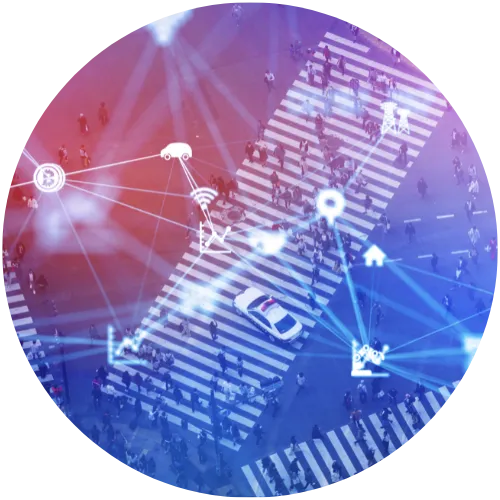
Government Agencies, Data Science Technologies
  • Efficiency and Convenience – On average, commuters spend 54 hours per year either stalled or traveling at a crawling pace due to traffic. The congested road conditions driving this high idling rate impact the flow of trucks, private cars, and passenger transit vehicles alike, resulting in an estimated six billion gallons of fuel wasted annually by all road vehicles.
  • Environmental Footprint – According to the U.S. Environmental Protection Agency, the transportation sector is the largest contributor to greenhouse gas emissions in the nation. A significant contributor to this pollution is idling. Engine idling of heavy-duty trucks alone releases an estimated 11 million tons of carbon dioxide, 55,000 tons of nitrogen oxides, and 400 tons of particulate matter into the environment in the U.S. each year. Hence, a robust decarbonization effort is mandatory if the U.S. transportation sector reaches the goal of net-zero greenhouse gas emissions by 2050.

Connecting the Dots for Improved Transportation

Innovative solutions are essential given the enormity of the issues that transportation agencies must tackle—and the immeasurable public interest in the outcomes of these efforts. Fortunately, technological advances offer promising approaches to the industry’s most significant challenges. AI-driven technologies empower transportation agencies to increase the effectiveness and immediacy of critical tasks, including monitoring traffic flow and safety, detecting maintenance issues, and assessing risks. By integrating data collected from multiple sources, agencies can perform advanced predictive and prescriptive analytics to inform accurate forecasts of roadway conditions and traffic volume, inform interventions, and aid in developing strategies for reducing carbon emissions. 

Government Agencies, Data Science Technologies

Examples abound of data-powered tools and techniques driving improvements throughout the transportation industry:

  • Intelligent Transportation Systems (ITS) are integrated technologies that connect multiple data sources to improve the speed and accuracy of detection, communication, and analysis of potential concerns. These sophisticated networks merge data from such sources as remote sensors and CCTVs to aid agencies in identifying and addressing roadway hazards and other safety concerns. ITS also increases agencies’ capacity to manage traffic flow, minimize idling, and optimize route planning for greater fuel efficiency and reduced emissions.
  • AI-driven technologies can also improve railway safety. Enlisting the nearly ubiquitous CCTVs at railroad crossings to act as sensors, these tools can aid in real-time, continuous monitoring of video data. Assisting human monitors, who are subject to fatigue and can therefore miss hazards or incidents that impact safety, these tools enable increased supervision to inform more prompt and targeted intervention when dangers arise.
  • Sensors collecting real-time data about the health of a vehicle help transportation agencies monitor the vehicle’s performance and condition. By contributing to the timeliness and effectiveness of maintenance, these technologies help agencies improve equipment safety and efficiency and aid them in identifying issues that impact the environment.
  • Government Agencies, Data Science Technologies
    • Connecting passengers with seamless, multi-modal transit options, mobility hubs and MaaS (Mobility as a Service) platforms are emerging in some cities to offer accessible, digitally-driven travel itineraries that maximize the benefits of various transportation modes. These services personalize the experience of getting around town and optimize safety, convenience, and efficiency.
    • As a welcome bonus, AI- and ML-powered technologies that lead to increased efficiency will also translate into cost savings for passengers.

A Data Savvy Workforce for Cleaner, Safer, More Efficient Travels

Technological advances are fueling progress in all areas of the transportation sector. As a result, the transportation workforce must be equipped with data literacy and data science skills across roles and functions to leverage these innovative capabilities. Training programs that provide industry-tailored learning pathways for learners at all stages of their data science journeys can help agencies upskill their personnel and meet the industry’s present and future challenges.   

Don’t wanna miss any Data Society Resources?

Stay informed with Data Society Resources—get the latest news, blogs, press releases, thought leadership, and case studies delivered straight to your inbox.

Data: Resources

Get the latest updates on AI, data science, and our industry insights. From expert press releases, Blogs, News & Thought leadership. Find everything in one place.

View All Resources
  • Deploying AI Apps at the Enterprise Level with Amazon Bedrock

    April 15, 2026

    Read more

  • AI Is Quietly Rewriting What “Good Work” Looks Like

    April 14, 2026

    Read more